
07 May 2026
Fire Door Inspection Checklist: What Inspectors Actually Look For (2026 Guide)
A practical 2026 guide to what fire door inspectors actually assess, how failures are recorded, and what building owners and duty holders should do next.
Approx. 4 min read
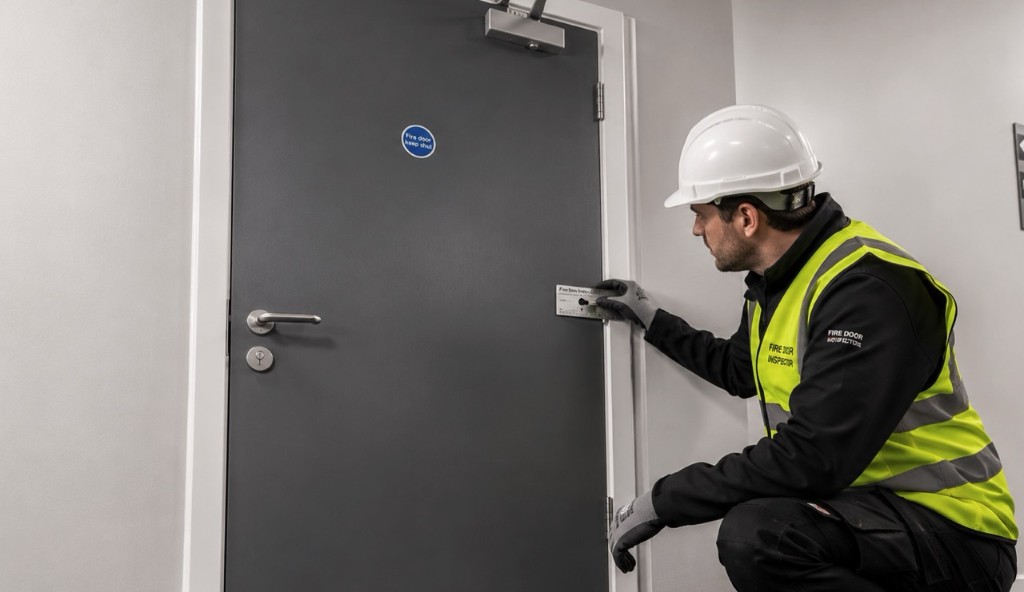
Related Services & Pages
Fire Door Inspection Service
BM TRADA-certified inspections with photographic compliance reports and prioritised remedial recommendations.
FD30 Fire Door Installation Birmingham
BAFE-registered FD30 supply and installation across Birmingham and the West Midlands.
Fire Door Services in Coventry
Inspection, installation and remedial fire door work for Coventry housing associations, developers and FM teams.
Fire Door Survey Checklist (UK)
Pre-survey preparation and our 13-point fire door survey checklist for duty holders.
What to Expect Before You Book
If you manage a residential block, commercial building, or housing portfolio, you'll know that fire door inspections are a legal requirement - not a nice-to-have.
Many building owners and property managers commission an inspection without fully understanding what the process involves, what inspectors are looking for, or what a failed finding actually means in practice.
This guide breaks the process down clearly so you know exactly what to expect before, during, and after inspection.
Why Fire Door Inspections Matter
Fire doors are your building's first line of passive defence. When they are functioning correctly, they contain fire and smoke long enough to allow safer evacuation and help limit structural damage.
When they are not functioning correctly - even by a small margin - that protection can fail. Under the Regulatory Reform (Fire Safety) Order 2005 and the Building Safety Act 2022, duty holders must ensure fire doors are inspected, maintained, and documented regularly.
For most multi-occupancy residential buildings, this usually means six-monthly checks for communal fire doors and at least annual checks for individual flat entrance doors.
At LF Property Solutions, inspections are completed to BS 8214 standards by BM TRADA-certified inspectors, with full photographic compliance reporting.
The Fire Door Inspection Checklist: Component by Component
Inspectors assess each fire door as a complete doorset. Below is what a thorough 2026 inspection typically covers under BS 8214-aligned practice.
1) Door Leaf Condition
Inspectors check whether the door leaf remains structurally sound and suitable for fire-resistance performance.
- Warping, swelling, or distortion that may prevent full closure
- Cracks, splits, holes, or impact damage in the leaf or core
- Unauthorised modifications such as non-compliant cut-outs
- Presence and legibility of FD30 or FD60 certification evidence
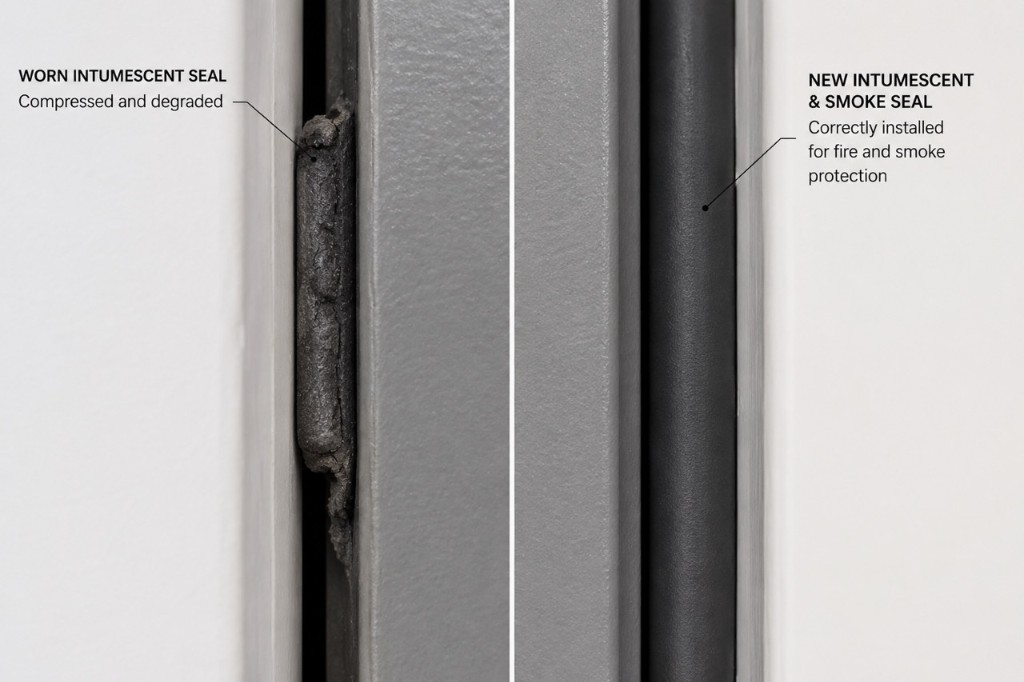
2) Intumescent Seals and Smoke Seals
This is one of the most common fail points because even small seal defects can compromise performance.
- Both intumescent and smoke seals present where required
- Seals are continuous and free from gaps or missing sections
- No heavy compression, splits, or deformation from wear
- Correct seal type and installation for the specific door set
3) Door Frame and Fixings
The frame is inspected as part of the same fire-resisting system, not as a separate cosmetic element.
- Frame stability, condition, and integrity
- Compatibility with the rated door specification
- Secure and appropriate mechanical fixings
- No unprotected frame-to-wall gaps that undermine fire stopping
4) Gap Tolerances
Gap measurement is critical because tolerance drift can quickly reduce fire and smoke containment performance.
As a general guide, side and head gaps should be between 2mm and 4mm, and threshold gaps should be up to 3mm unless a compliant threshold solution is in place.
5) Door Closers
Inspectors test whether the door self-closes and latches reliably from different open positions.
- Closer is present, operational, and correctly adjusted
- Door closes fully and latches from partial and wide-open positions
- No leakage or obvious signs of closer failure
- Closing speed is controlled and suitable for safe use
6) Hinges
Hinges must be suitable for fire door use and correctly installed to maintain safe operation.
- Correct hinge count for door size and weight
- Secure fixings with no missing screws
- No excessive wear, play, or movement
- Door hangs true without binding or dropping
7) Glazing and Intumescent Glazing Beads
Where vision panels are present, inspectors verify that all glazing elements remain compliant.
- Fire-rated glass with identifiable certification marks
- Correct intumescent glazing bead installation
- No cracks, chips, or edge damage
- Glazed area remains within permitted rating limits
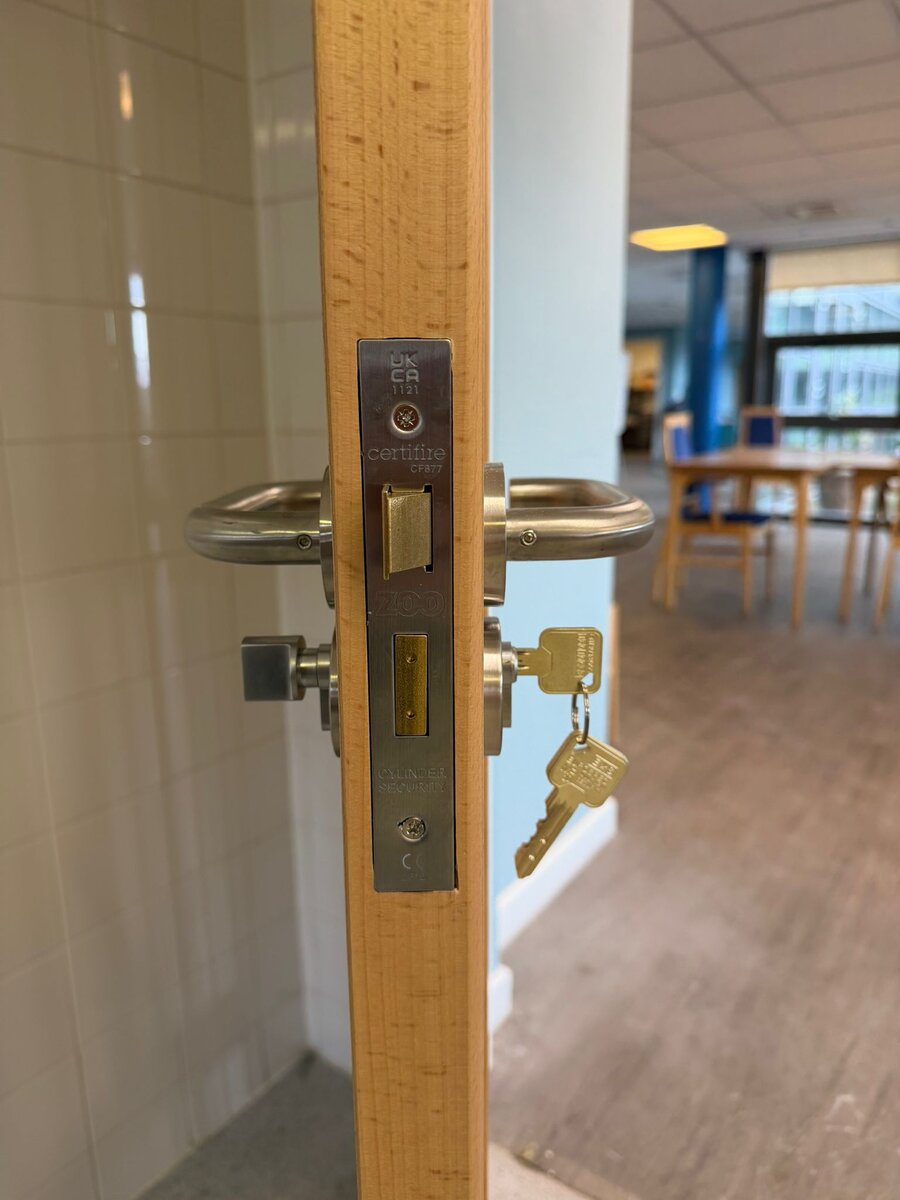
8) Hardware: Handles, Latches, and Lock Cases
All hardware must be appropriate for fire door service and function correctly in day-to-day use.
- Reliable latch engagement in closed position
- Hardware suitability and fire-rating appropriateness
- No excessive wear or loose operation
- Escape-route hardware functioning where applicable
9) Threshold and Bottom Seal
Threshold solutions are assessed where fitted to confirm proper sealing at the door bottom.
- Drop-down or threshold seal deploys correctly
- Seal mechanism is undamaged and properly aligned
- Clearances remain appropriate for the floor finish
10) Compliance Assessment and Documentation
A compliant inspection closes with clear evidence and prioritised actions for the duty holder.
- Pass/fail records for each inspected element
- Photographic evidence of defects and compliant items
- Priority-based remedial recommendations
- Clear audit trail for insurers, assessors, and safety case files
What Happens If a Fire Door Fails Inspection?
A failed item does not always mean full door replacement. Many issues can be resolved through targeted remedial works, including seal replacement, closer adjustments, hinge repairs, hardware correction, and tolerance rectification.
Where the door leaf, frame, or core is compromised beyond repair, certified replacement may be required. In those cases, the key is acting quickly and documenting the remediation path clearly for your compliance records and insurers.
How Often Should Fire Doors Be Inspected?
As a practical baseline, communal fire doors in multi-occupancy residential buildings should be checked every six months, and individual flat entrance doors at least annually.
High-traffic commercial environments may need a more frequent cycle based on use, occupancy risk profile, and fire risk assessment outcomes.
If frequency is unclear, document your rationale and err on the side of more frequent review.
Book a Fire Door Inspection in Birmingham or Nationwide
LF Property Solutions carries out fire door inspections across Birmingham, the West Midlands, and nationwide UK projects.
Our BM TRADA-certified team delivers thorough BS 8214-led assessments with clear reporting designed for compliance files, insurers, and building safety case evidence.
Based in Birmingham and need a local specialist? Get in touch for a no-obligation discussion about your building requirements.
Frequently Asked Questions
How often should fire doors be inspected?
What happens if a fire door fails inspection?
What gap tolerances do fire door inspectors check?
What documentation should I receive after a fire door inspection?
Do I need a BM TRADA-certified inspector?
Related Fire Safety Services
Explore our core compliance services if you need inspection, remedial support, or ongoing fire door maintenance.